Chromattice
Cross-stitch pattern maker
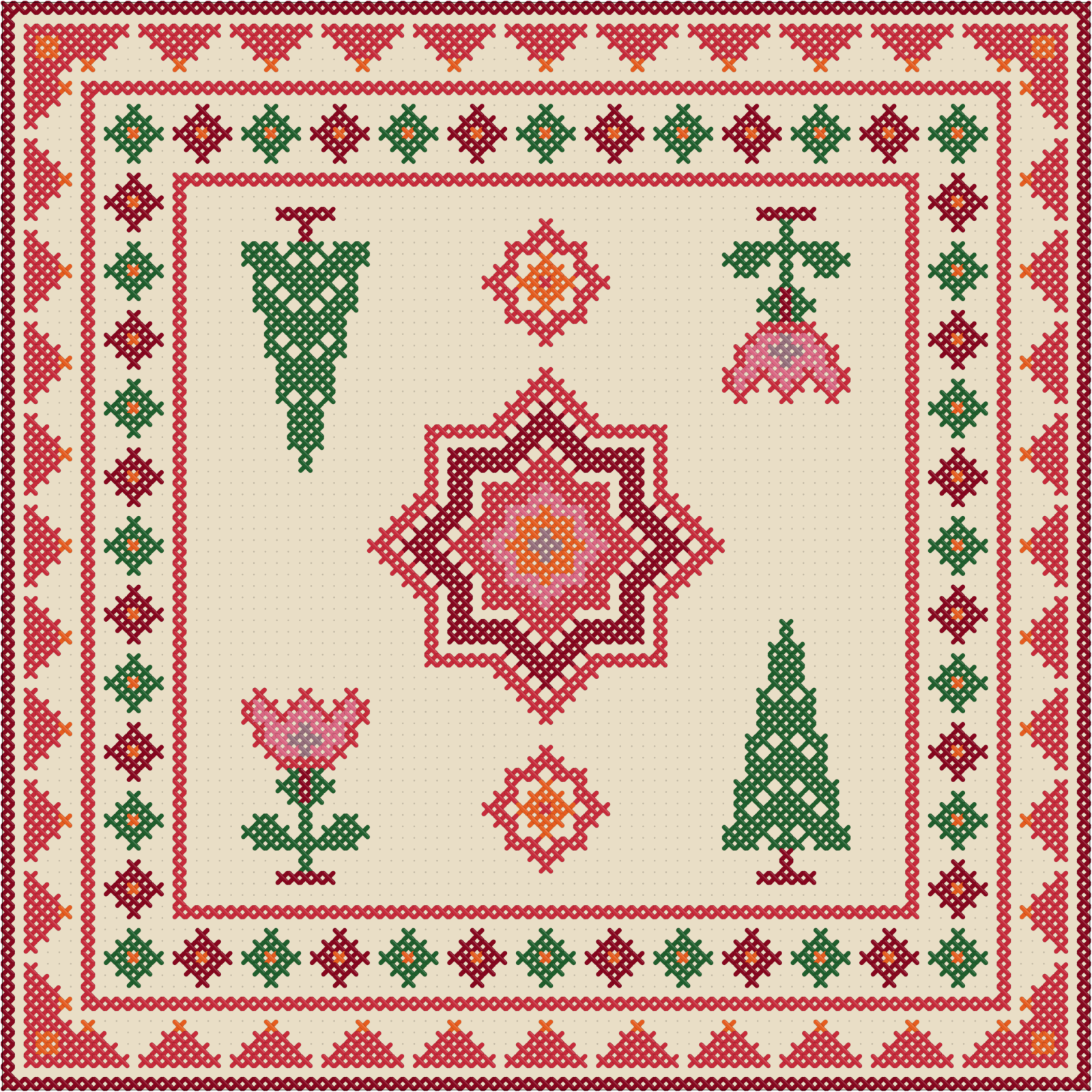
Counted cross-stitch is embroidery made of tiny X’s, each worked over one square of Aida, or over two threads of linen or evenweave. The pattern is a chart, a square for each cross; it’s a craft of its own and the main stitch of traditions such as Palestinian tatreez. Chromattice charts your pattern square by square and shows it as stitched, little X’s on the fabric’s colour.
Start a cross-stitch designFree, in your browser. No account needed to start.
What the designer does for cross-stitch
- Real floss colours: pick threads from DMC’s stranded cotton by name or number, and the number stays with the colour on the chart, in the key and in the shopping list.
- The fabric is the background, not a thread: its squares are shown in the cloth’s colour but never counted, keyed or given a symbol.
- Finished size from the fabric count: choose 11, 14, 16, 18 or 22 count and see the size in centimetres and inches.
- A chart to stitch from, with a symbol for each colour, rulers, and a key of DMC numbers, stitch counts and skeins to buy.
- Symmetry and layers for traditional motifs: mirror left and right, top and bottom, or eight ways, so a star or a border is drawn once.
- See it stitched: gallery pictures and downloads show the design as X’s on the fabric.
Good to know
- Start from the middle of the fabric, so the finished design is centred with the same margin on every side. (needlework-tips-and-techniques.com)
- Stranded cotton comes as six strands; two is usual on 14-count Aida. (needlework-tips-and-techniques.com)
- Make every top stitch slant in the same direction, from one edge of the piece to the other. (needlework-tips-and-techniques.com)
- On linen or evenweave each cross usually covers two threads, so 28-count linen gives a design the size it would be on 14-count Aida. (needlework-tips-and-techniques.com)
- In Ramallah embroidery, the colours changed with the times: dresses and scarves of the mid-to-late 1800s used red, maroon, green, orange, grey, mauve and pink; by the early to mid 1900s they were usually red and black silk. (palestineheritage.org)